
While speaking earlier today with Barry Rothenberg, Ph.D., several questions emerged regarding the development and potential applications of his new Air Veil™ low-oxygen incubator.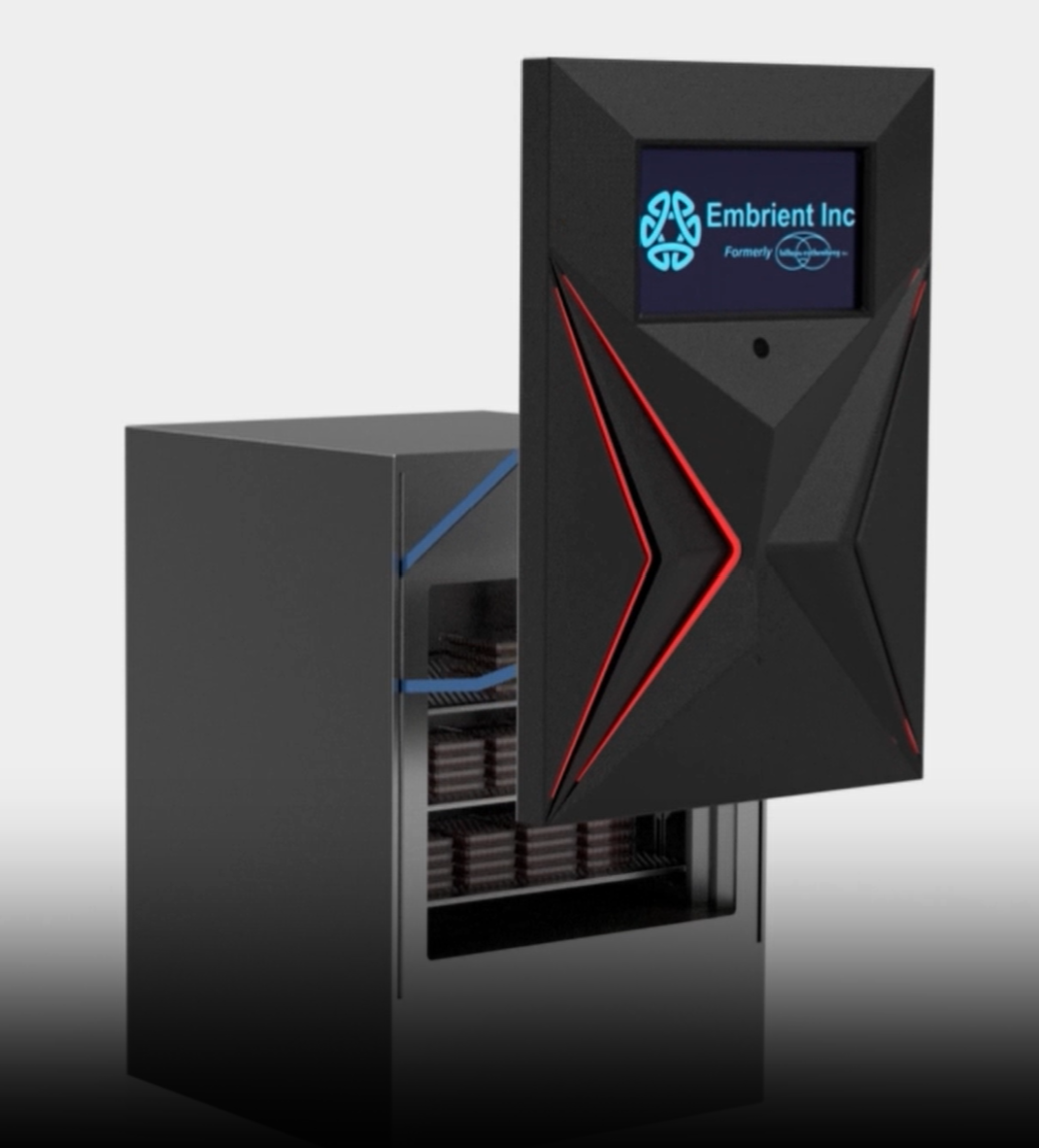
1. Biological relevance to scRNA-seq and spatial multi-omics
Will Oxygen tension influence transcriptomic fidelity?
There is strong mechanistic and experimental support for the idea that even short, repeated oxygen perturbations materially affect single-cell transcriptomes, especially in cancer systems.
Key points:
-
HIF signaling responds on the order of minutes, not hours. Transient re-oxygenation during door openings can:
- Suppress HIF1A stabilization
- Alter glycolytic gene expression
- Shift mitochondrial vs glycolytic transcriptional programs
- In clonal monitoring and hypoxia-adapted tumor populations, these effects are not averaged out; they create artificial sub-states that appear as biological heterogeneity.
For single-cell cancer studies, especially those focused on:
- hypoxia gradients,
- metabolic plasticity,
- therapy resistance,
- stem-like or persister states,
door-opening artifacts are a credible source of false clusters and misleading trajectory inferences.
pH, lactate, and pyruvate effects
Your specific question about lower lactate, higher pyruvate, and a ~0.5 unit pH increase is particularly important.
-
A 0.5 pH shift is very large at the cellular level.
- pH directly modulates chromatin accessibility, histone acetylation, and RNA polymerase activity.
-
Lactate is no longer considered merely a waste product:
- It regulates histone lactylation
- Influences immune evasion programs
- Affects lncRNA expression associated with hypoxia and metabolic stress
-
Pyruvate availability alters:
- NAD⁺/NADH balance
- Mitochondrial transcriptional programs
- ROS-dependent signaling
In cancer cells, especially under low-oxygen culture:
- lncRNAs are disproportionately sensitive to metabolic and redox state.
- Many hypoxia-associated lncRNAs (e.g., HIF-regulated or chromatin-modulating lncRNAs) show rapid expression changes with environmental perturbation.
This matters for:
- 10x Genomics (short-read Illumina): where dropout and shallow coverage amplify state-dependent artifacts.
- Nanopore (long-read): where isoform usage and transcriptional noise can be misinterpreted as biological novelty.
In short: yes, tighter control of lactate, pyruvate, and pH—enabled by near-zero recovery times—can meaningfully influence scRNA-seq and spatial multi-omics results, particularly for lncRNAs and metabolic programs.
Is temporal instability is a real problem?
The most underappreciated issue is not absolute setpoints but temporal instability.
Traditional incubators introduce:
- Repeated micro-reoxygenation events
- Cyclic pH drift
- Gas concentration oscillations
These produce transcriptional stress signatures that:
- Are synchronized with lab workflows
- Confound time-course and lineage tracing experiments
- Artificially inflate heterogeneity
An incubator that truly decouples door access from environmental perturbation directly improves biological signal-to-noise.
2. Economic and adoption logic
Consider the cost structure of modern single-cell experiments:
- scRNA-seq library prep: USD 2,000–10,000 per run
- Sequencing: USD 5,000–20,000
- Personnel + compute: substantial
- Failed or ambiguous experiments: extremely costly
Against this backdrop:
- An incubator priced even 2–3× higher than Memmert or Thermo units is still a rounding error in total project cost.
-
If improved environmental control prevents:
- one failed experiment,
- one misleading biological conclusion,
- one irreproducible dataset,
Importantly, hypoxia labs and single-cell core facilities are:
- acutely aware of reproducibility issues,
- increasingly skeptical of “best-practice” incubators,
- already accustomed to paying premiums for marginal gains (e.g., microfluidics, reagents, optics).
3. Strategic implication for the Air Veil™ incubator
From a positioning standpoint, the strongest claims are not:
- comfort,
- convenience,
- or incremental recovery improvements,
but rather:
- Reduction of transcriptional artifacts
- Stabilization of hypoxia- and metabolism-linked gene programs
- Improved interpretability of single-cell and spatial data
- Lower downstream experimental risk
If Embrient can demonstrate—even in limited pilot datasets—that:
- cluster structure stabilizes,
- hypoxia signatures sharpen,
- lncRNA variability decreases,
- or batch effects tied to handling are reduced,
the instrument will resonate strongly with exactly these single cell labs.
Bottom line
Yes—for single-cell cancer clonal monitoring, hypoxia research, and spatial multi-omics, the environmental precision you describe is not a marginal improvement; it is biologically consequential.
In that context, a significantly higher incubator price is rational, defensible, and likely acceptable to the market.

Lieven Gevaert, bio-engineer 1996 Gent
Gentaur Molecular Products BV